
Halstead Bead Inc.
E-Commerce Website Redesign
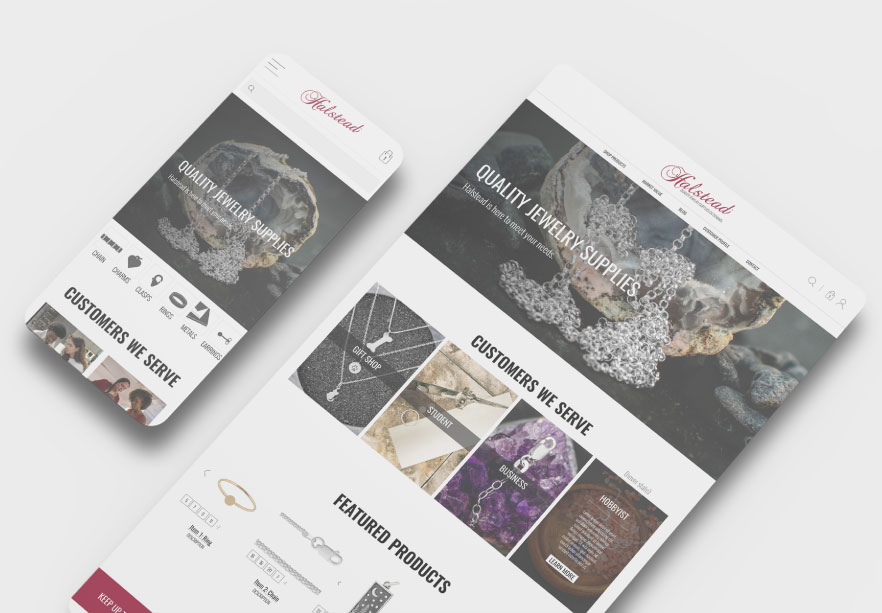
As more customer orders shifted from phone calls to online purchasing, Halstead recognized the need to modernize their website experience. The goal was to create a cleaner, more contemporary design with improved usability, streamlined navigation, and a more intuitive shopping experience that would better serve both new and long-time customers. The redesign also focused on making product discovery easier through enhanced filtering, clearer customer pathways, and updated landing pages tailored to different types of shoppers.
Scope
Team
Janelle Hinesley – UI/UX Designer
Ashley Maldonado – Marketing Specialist
Kelli Greene – Manager
Sylvie Alusitz – Studio Coordinator
Znode – Web Developer
Year
2023
About
Halstead
Halstead is an e-commerce jewelry supply firm that caters to both large and small studios in every facet of the jewelry industry (pun intended). Halstead believes in the power of small businesses to support hard-working families who want to live life on their own terms. Small business drives our economy and the American dream for many entrepreneurs. We know how tough it is and we respect the tenacity it takes to build a jewelry studio. We endeavor to be an advocate and indispensable supply chain partner for small jewelry businesses around the world.
My Role
I played a key role in the research, UX/UI design, and prototyping process for the Halstead website redesign, helping translate business goals and customer needs into a more modern e-commerce experience. My responsibilities included conducting design and user research, developing wireframes and page prototypes, and designing several core website pages focused on improving navigation, product discovery, and overall usability.
In addition to the UX/UI work, I created a custom set of jewelry category icons to support a cleaner and more evergreen visual system across the site. I also sourced and photographed new imagery for updated layouts and customer landing pages, ensuring the visual content aligned with the refreshed branding and improved shopping experience.
The Problem
Shoppers found the current site un-intuitive and difficult to navigate
Halstead’s previous website no longer reflected the way customers were shopping or interacting with the brand. The outdated design, difficult navigation, and limited product discovery tools made it harder for customers to quickly find products, browse new inventory, and move through the purchasing process efficiently.
The Solution
A web-based game designed around limited download access and low tech comfortability
To make the game accessible to students, specifically government employees who are limited in downloading applications, we will be creating a WebGL based game. To increase immersion, the simulation will mimic the environment of an EOC and as well as allowing users to interact with non-player characters and items in the environment to complete various role based tasks. The scenario will include a surprise inject – replicating real life emergencies where an emergency can experience rapidly changing developments.
Key Features
- Each role provides a unique player experience, allowing the user to experience what part each position plays in an EOC.
- Experiencing a realistic emergency scenario, making the game applicable and appealing to students nationally.
- Gamified elements that make the experience more interactive and engaging for students.
Research
Gain an in-depth understanding of user segments, pain points, and best UI/UX practices for e-commerce websites
Table of Contents
Requirements
With the changing landscape of online retail over the last few years, Halstead Bead has transitioned from a wholesale jewelry supplier to offering both wholesale and retail.
This meant that the website needed:
- A sleeker, more modern design that would help draw in younger customers without alienating the older ones
- Improved navigability & product filtering that would allow current and new customers to find items faster and with less stress
- New landing pages that would be aimed at the 4 main types of customers Halstead served
- Various ways of showing customers new products that they otherwise wouldn’t have seen
User Research
User research was conducted to better understand the needs and shopping habits of Halstead’s four primary customer groups: students, gift shop owners, businesses, and hobbyists. Each audience had different goals and expectations when browsing the site, so the research helped identify the types of products, content, and navigation paths that would best support their experience. These insights guided the creation of targeted landing pages and customer journeys tailored to each segment.
Students
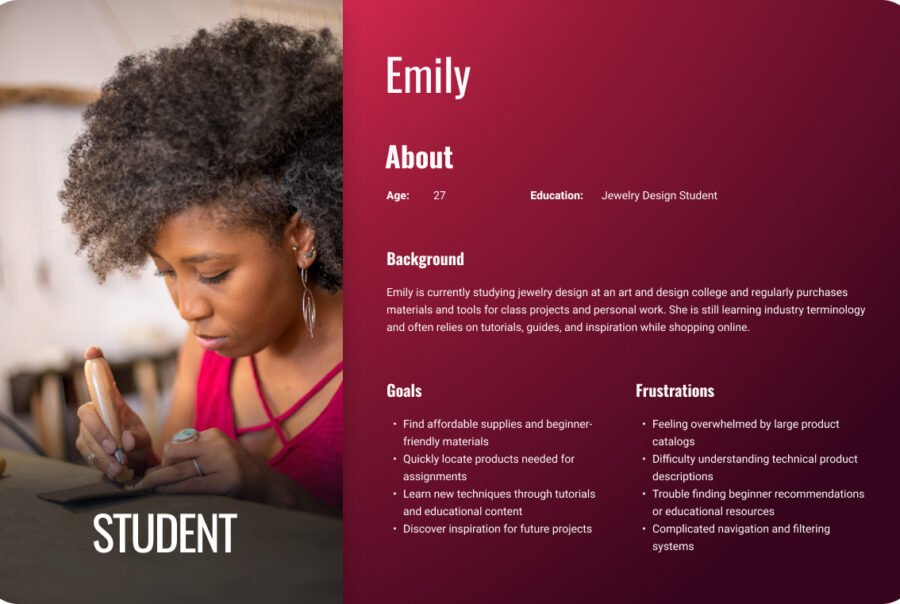
Student customers were primarily looking for affordable materials, educational resources, and easy-to-follow product organization while learning jewelry-making techniques. The redesigned experience focused on helping them quickly find beginner-friendly supplies, tutorials, and tools without feeling overwhelmed by the larger catalog.
Businesses
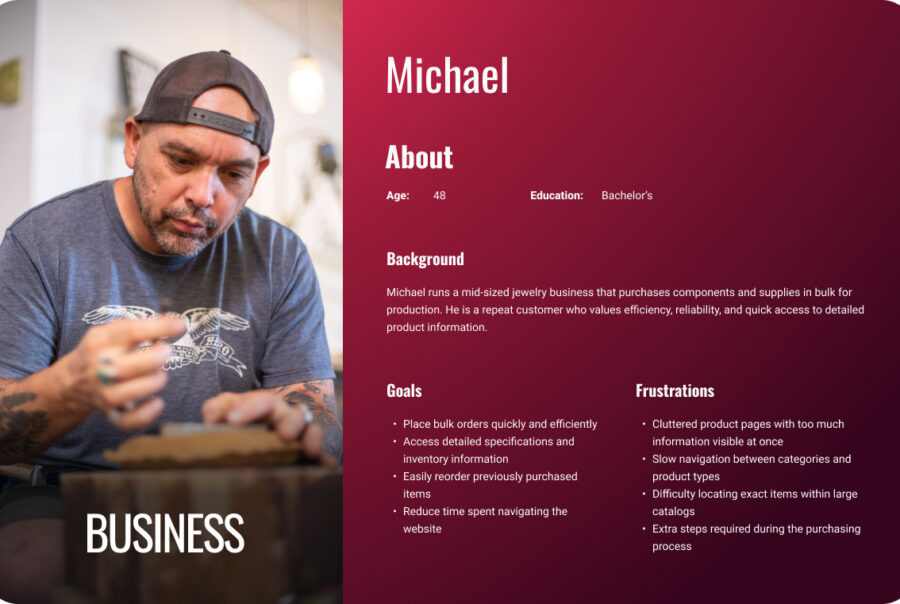
Business customers often purchased in larger quantities and required dependable access to product details, pricing, and bulk ordering options. Research for this segment focused on improving efficiency and reducing friction throughout the purchasing process so returning customers could place orders more quickly.
Gift Shops
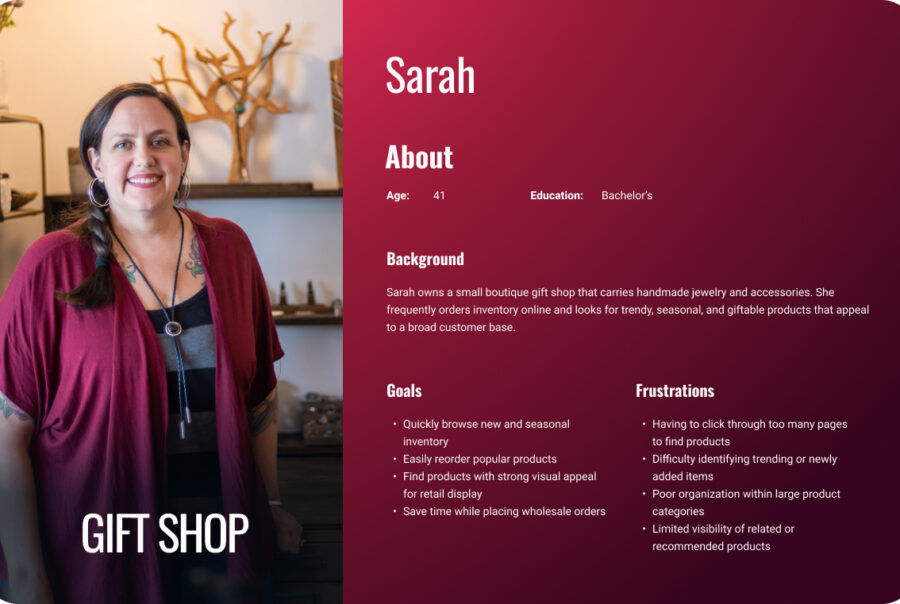
Gift shop owners needed a faster and more streamlined wholesale ordering experience, along with easy access to trending and seasonal products. Their user journey focused on efficient browsing, quick product discovery, and clear navigation to support repeat purchasing and inventory planning.
Hobbyists
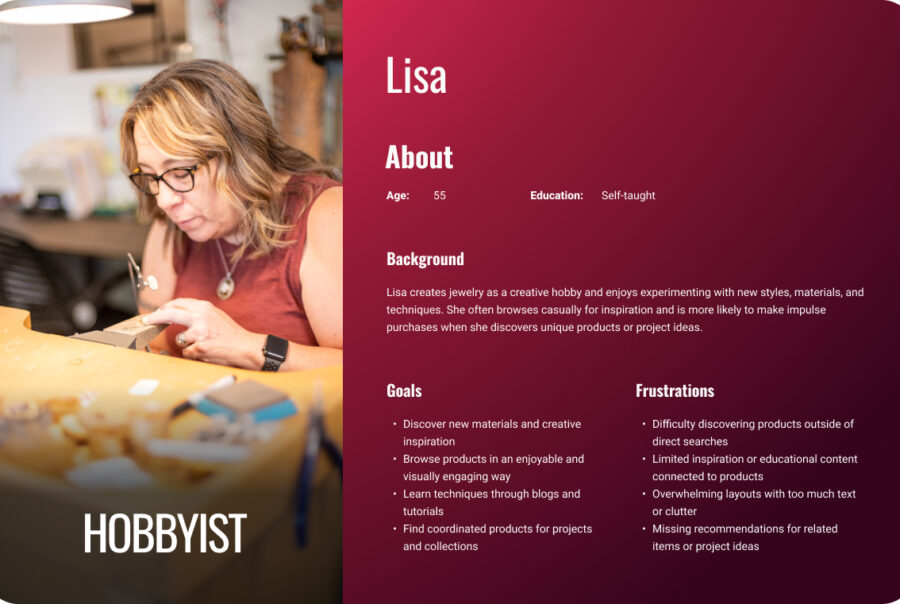
Hobbyist customers were more exploratory in their shopping habits, often browsing for inspiration, new materials, or creative ideas for future projects. Their experience emphasized product discovery, visually engaging layouts, and recommendations that encouraged them to explore products they may not have originally searched for.
Design Research
Before beginning the prototyping process, research was conducted to better understand how customers were using the existing website and where the largest usability issues were occurring. This included reviewing customer feedback, identifying common navigation pain points, analyzing how different customer groups interacted with the site, and examining competitor and industry trends within e-commerce.
Special attention was given to Halstead’s four primary customer segments—students, gift shop owners, businesses, and hobbyists—to better understand their different goals, browsing habits, and purchasing behaviors. These findings helped guide decisions around navigation structure, page hierarchy, filtering systems, and content organization, ensuring the new designs would better support both new and returning customers.
E-commerce Best Practices
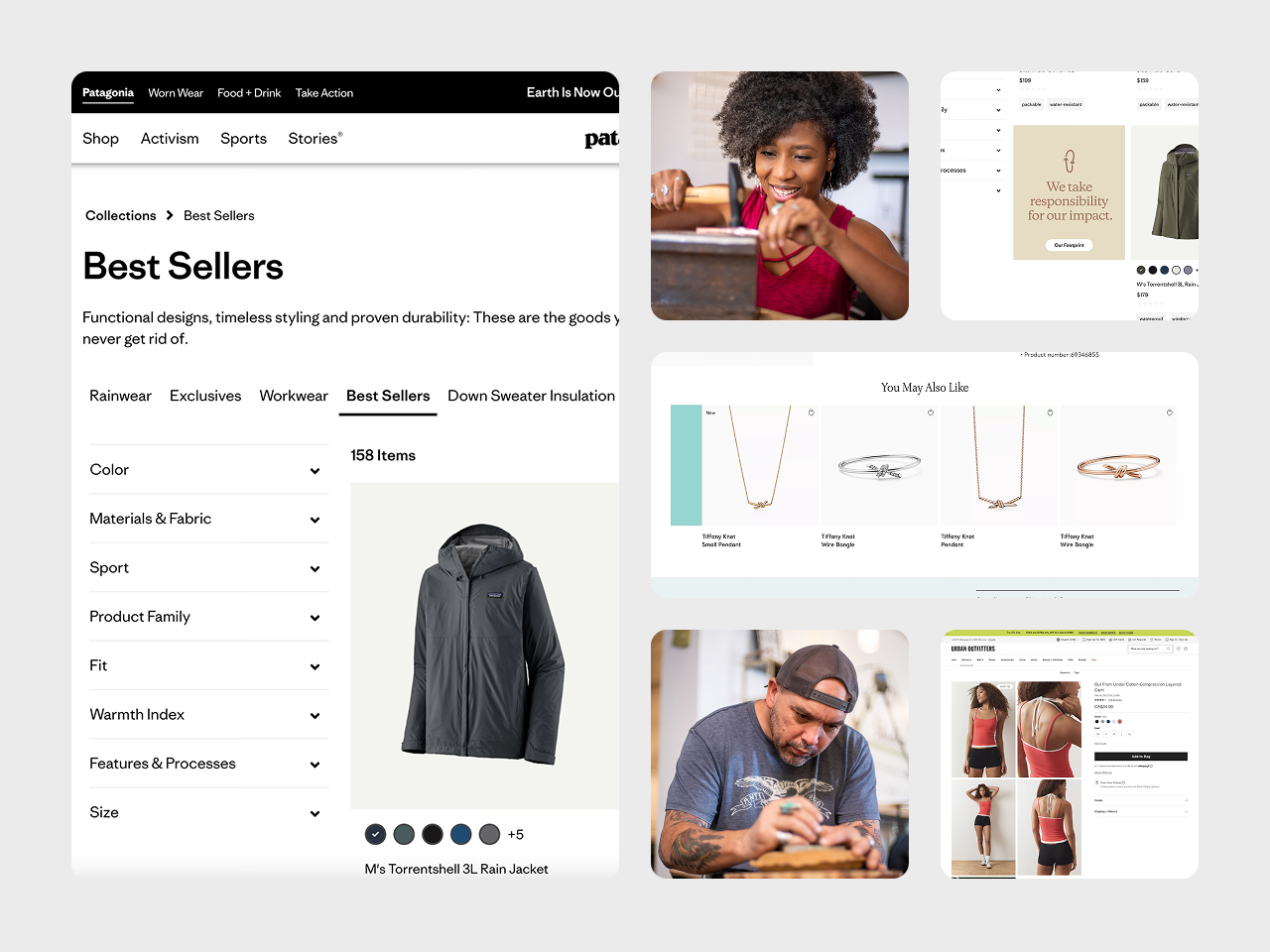
Part of the design research focused on identifying current e-commerce best practices and finding ways to make information easier for customers to discover throughout the shopping experience. Research into competitor websites and modern e-commerce trends highlighted the importance of cross-linking products, educational content, and related categories to create a more connected browsing experience.
Based on these findings, the redesigned layouts incorporated areas for suggested products, related categories, featured blog articles, and additional educational resources across key pages of the site. Navigation structures and page layouts were also designed to make important information easier to scan and access, helping improve product discovery while encouraging customers to explore more of the website.
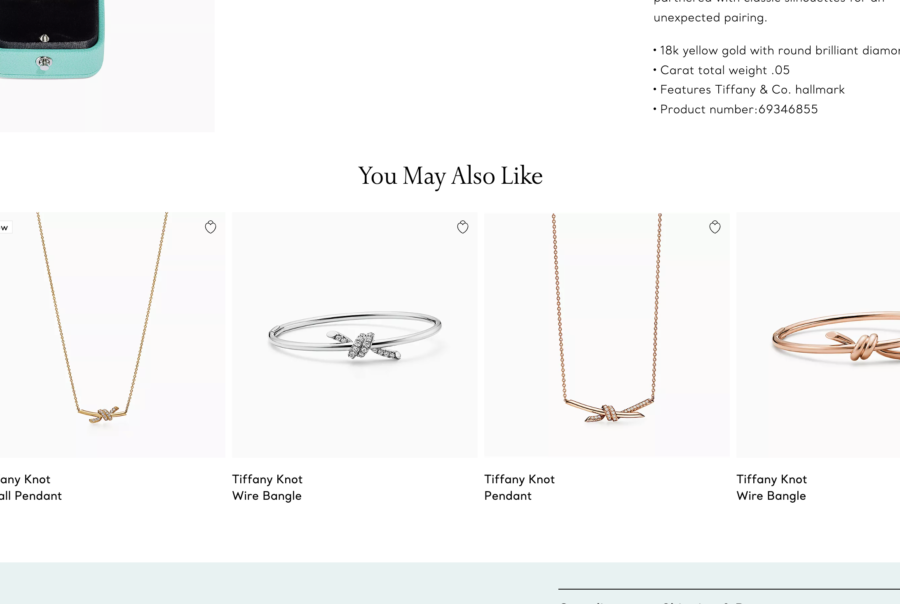
Inspiration for highlighting products to allow users to explore more
Inspiration for ways to highlight relevant blog articles
Customer Segments
A major focus of the design research was finding better ways to guide Halstead’s different customer segments toward content and products that were most relevant to them. Research showed that many users were entering the website with very different goals, but the previous site treated all customers the same, making it harder for users to quickly find the products, resources, and information tailored to their needs.
One of Halstead’s key requests for the redesign was the introduction of dedicated customer landing pages, something the previous website did not have. To support this, research was conducted into how other e-commerce brands segmented their audiences, introduced customer pathways, and highlighted personalized shopping experiences directly from the homepage.
Based on these findings, a dedicated homepage section was designed to direct customers toward landing pages built specifically for students, gift shop owners, businesses, and hobbyists. The goal was to create clearer entry points into the site experience, helping users immediately identify content and products relevant to them while improving overall navigation and product discovery.
Menu Design
Desktop
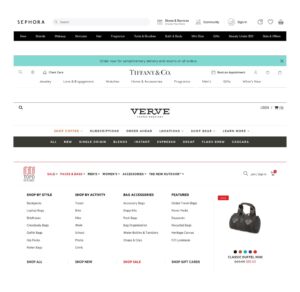
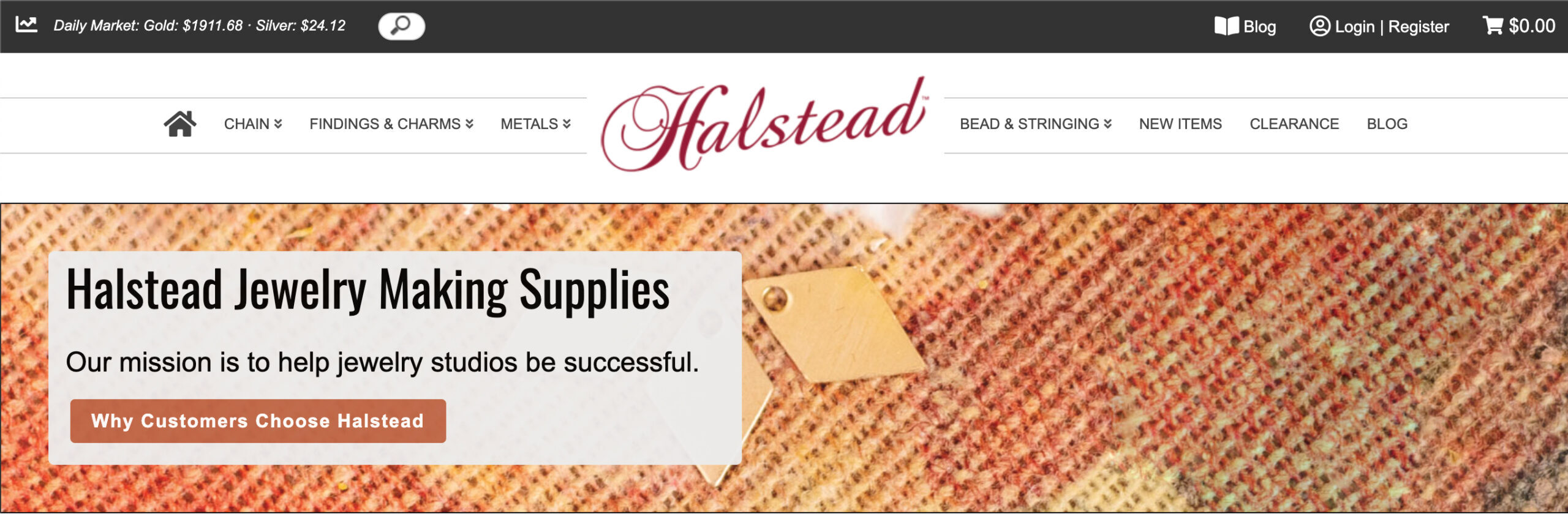
Halstead needed a multi-menu design that would be easy for our customers to navigate and would work with the multiple subcategories we have of our products. Leadership did not like the mega menu designs, so anything like menu of Topo Designs was out.
After looking at several websites, I settled on a design similar to Verve. We liked that the submenu stayed a single line, but we wanted the submenu to show under the masthead image so customers wouldn’t have to scroll too far up to reach it.
Original Halstead menu design

Menu design inspiration

New menu mockup
Mobile
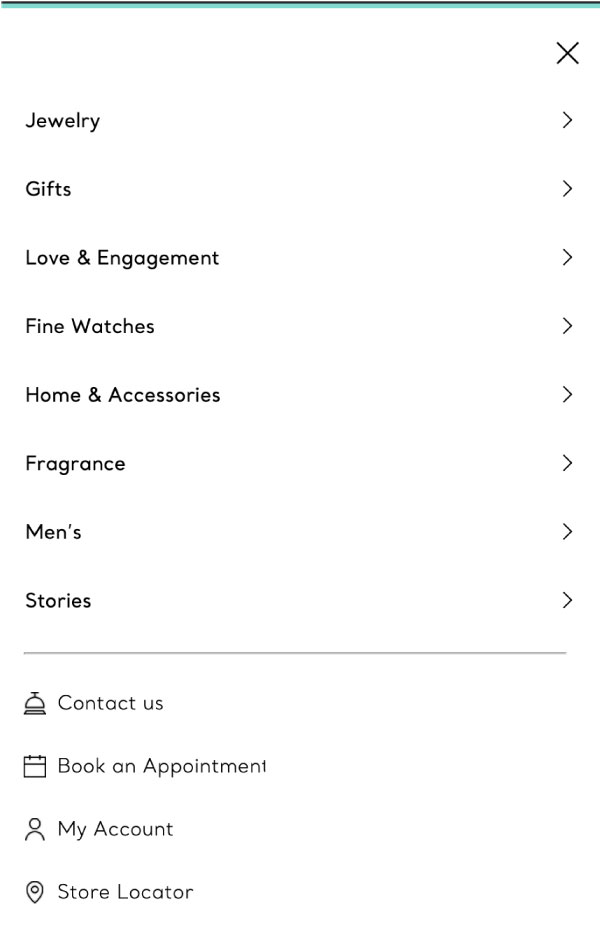
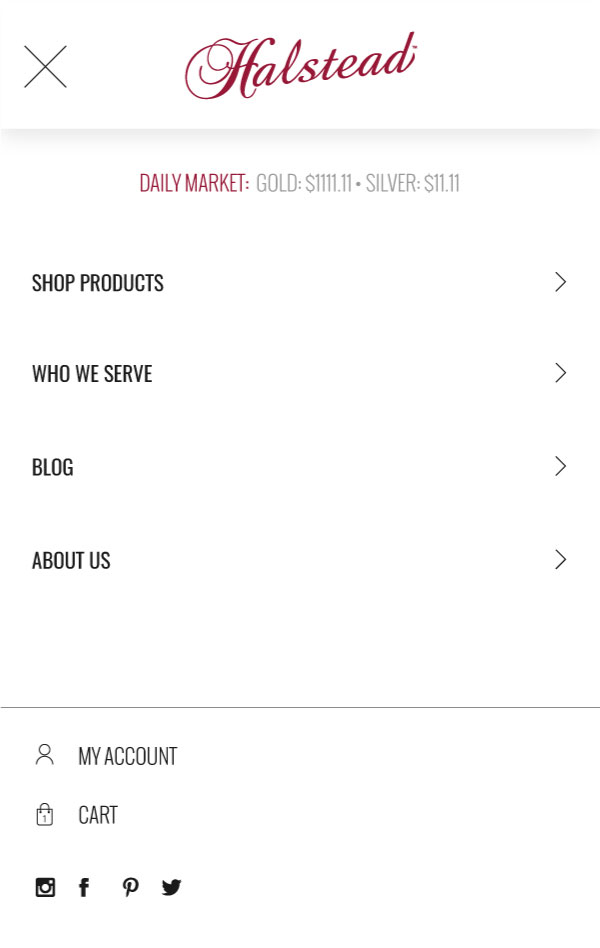
While the original mobile menu design was responsive, leadership wanted the design to be simplified, include login and cart options, and to incorporate the daily market prices as those influence the price of the items that day.
The mobile menu that most closely aligned with what we were looking for was Tiffany’s website. While it lacked anything similar to the market prices, our team liked how the main menu and top menu translated into their mobile design.
Mobile menu inspiration - Tiffany
New mobile menu mockup
Prototyping
Translate the research findings into an accessible and easy to use responsive shopping experience.
Table of Contents
Requirements
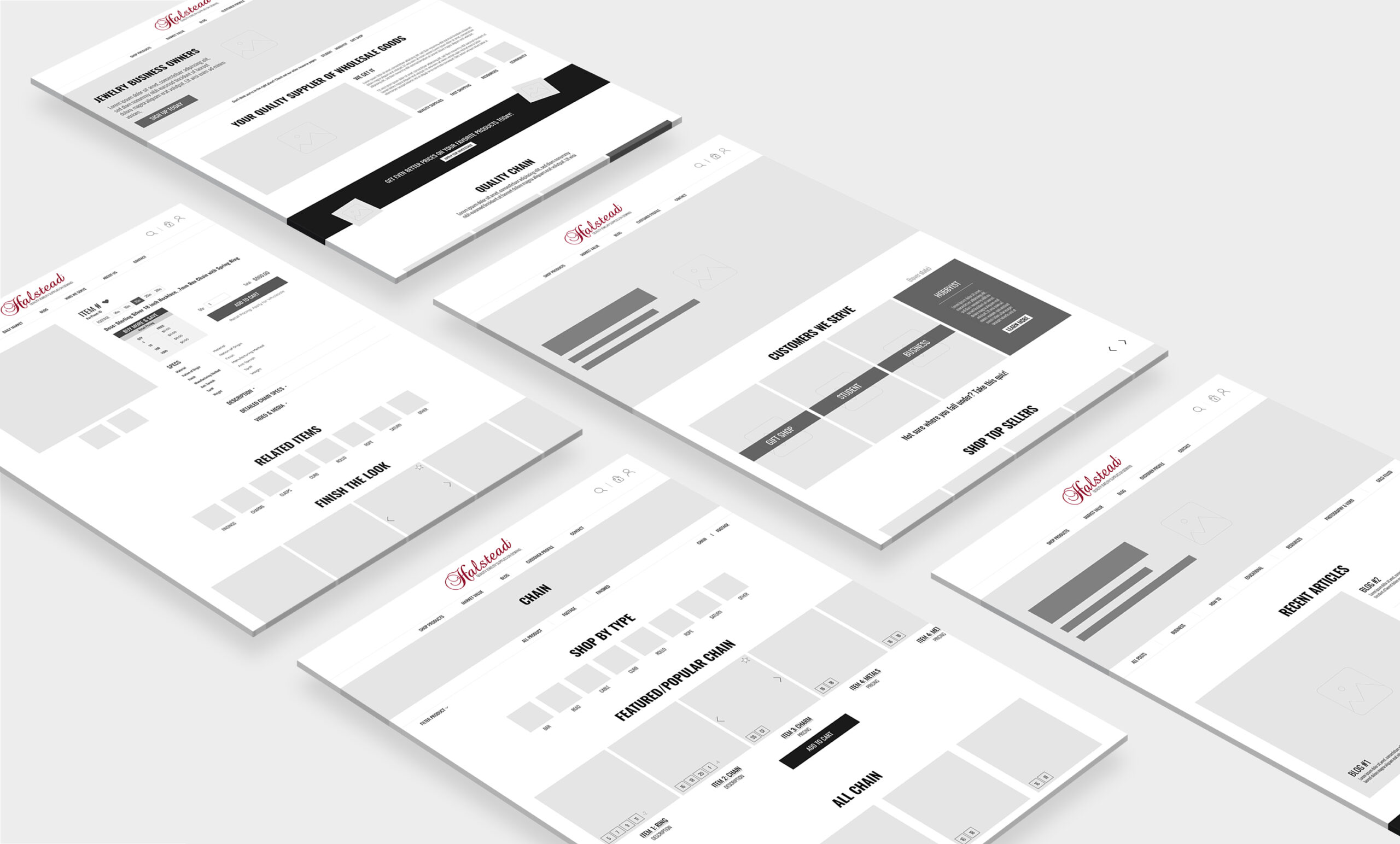
The prototyping phase for the Halstead website redesign focused on creating a more modern, user-friendly e-commerce experience that better supported both wholesale and retail customers. Key requirements included improving navigation and product filtering, simplifying page layouts, creating dedicated customer pathways for Halstead’s main audience segments, and incorporating areas for product recommendations, educational content, and cross-linking opportunities. The prototypes also needed to align with modern e-commerce best practices while remaining flexible enough for iterative feedback and future growth.
Sitemap
Based on findings from the user research phase, the sitemap was completely redesigned to better reflect how customers naturally searched for products throughout the website. Research showed that users were more likely to browse by the type of jewelry finding they needed rather than by metal type, so the navigation structure was reorganized around product categories instead of materials. This updated sitemap created a more intuitive browsing experience, improved product discovery, and reduced friction when navigating the large catalog of items.
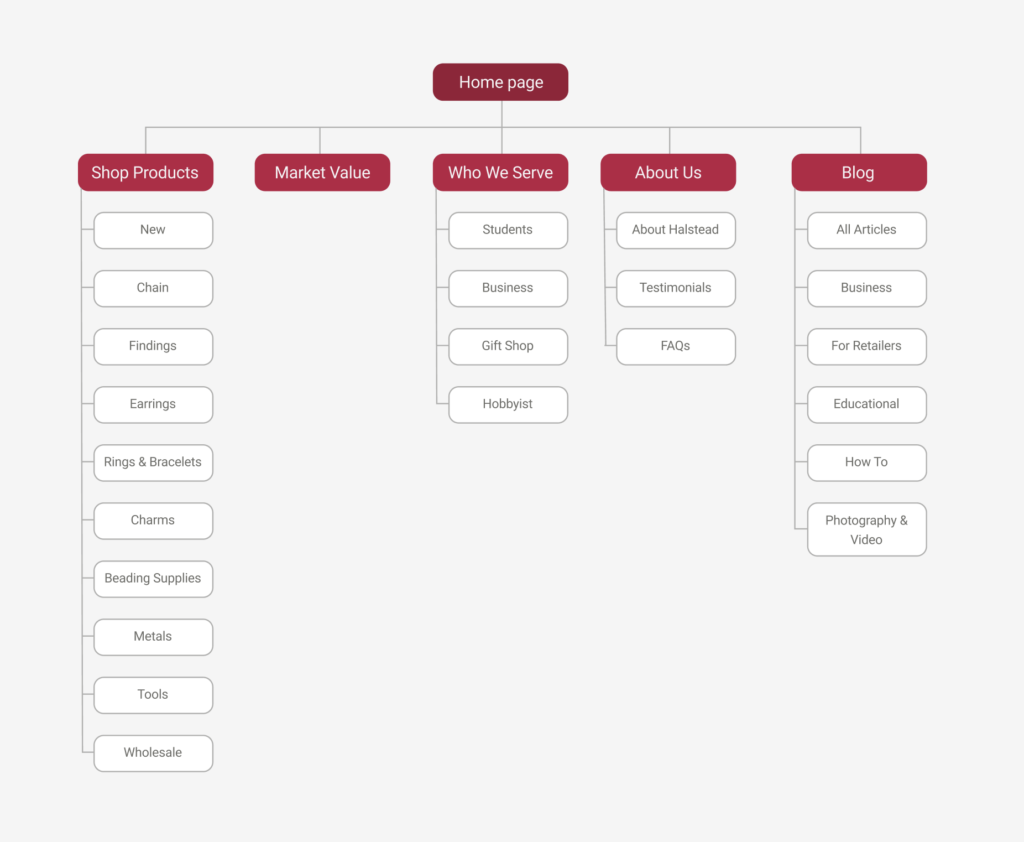
Sitemap version 2
Homepage
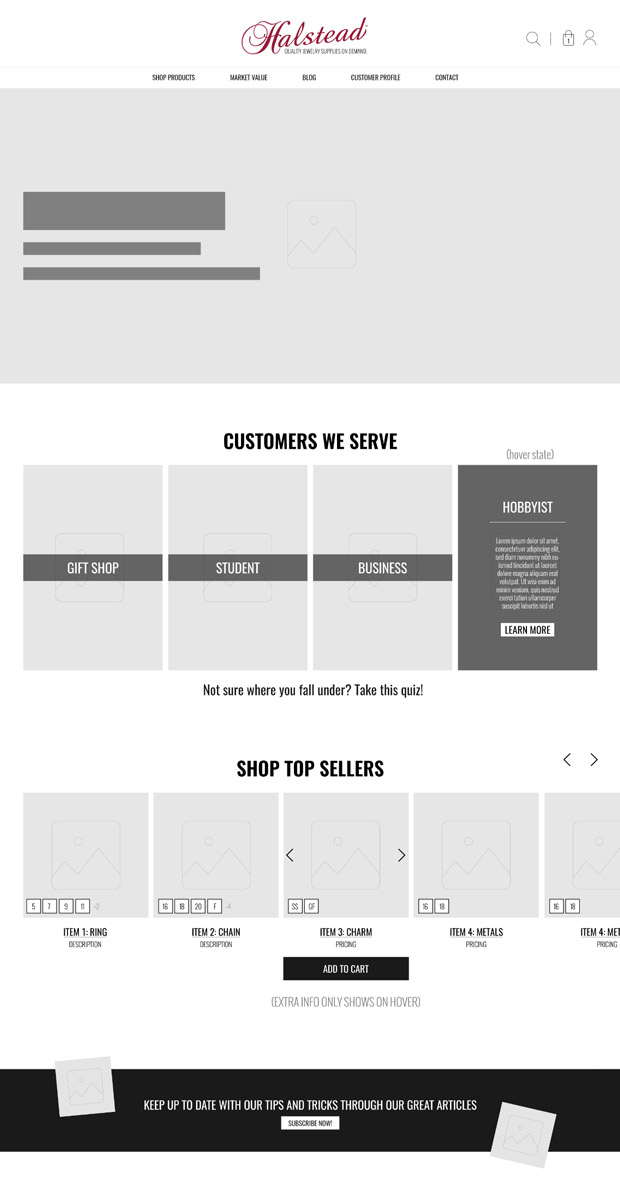
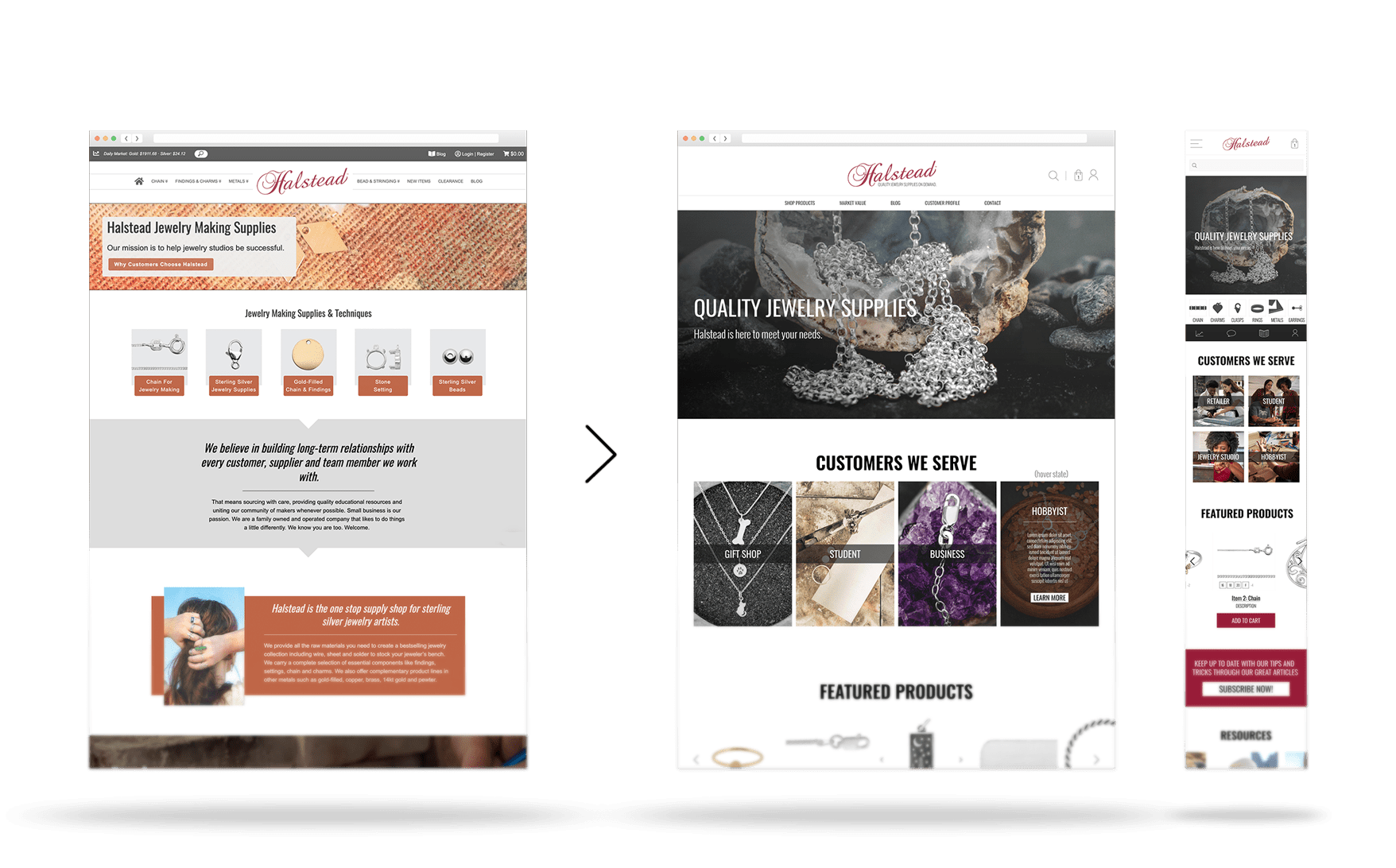
I cleaned up and modernized the new home page so that it now features a larger masthead and a reduced amount of copy. The product categories seen below the former website masthead didn’t lead to product pages, but info pages. The new design now features actual products and product categories higher up in the page.
Halstead wanted to create and feature info pages for the four main categories of customers we serve, so that became the main feature below the masthead.
Blog
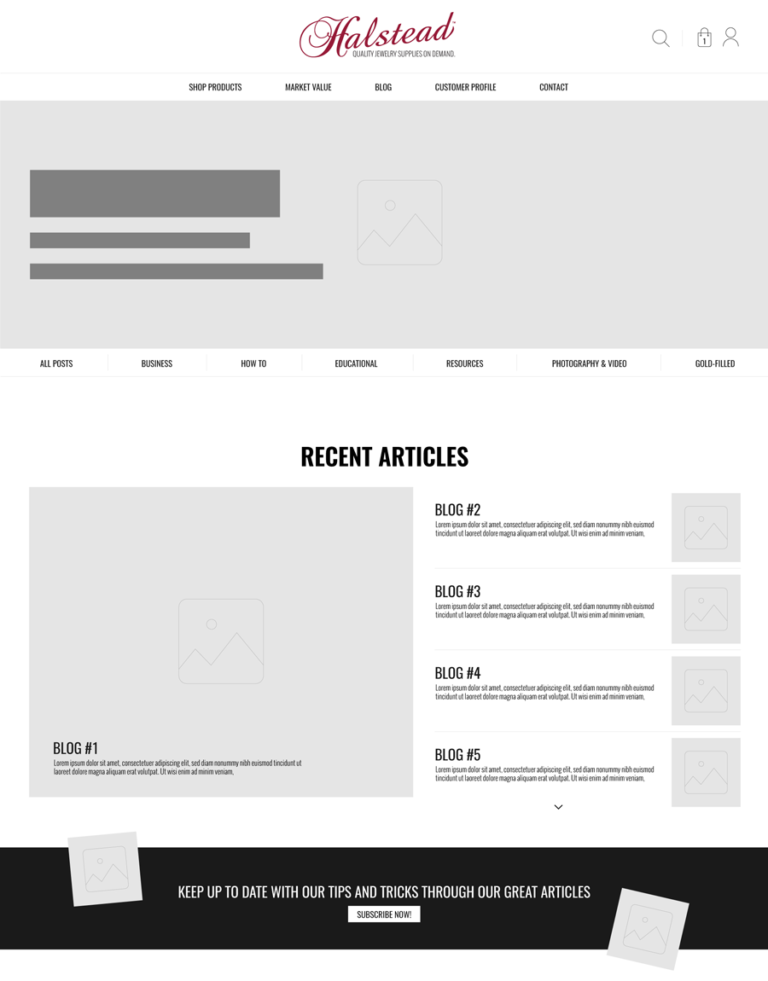
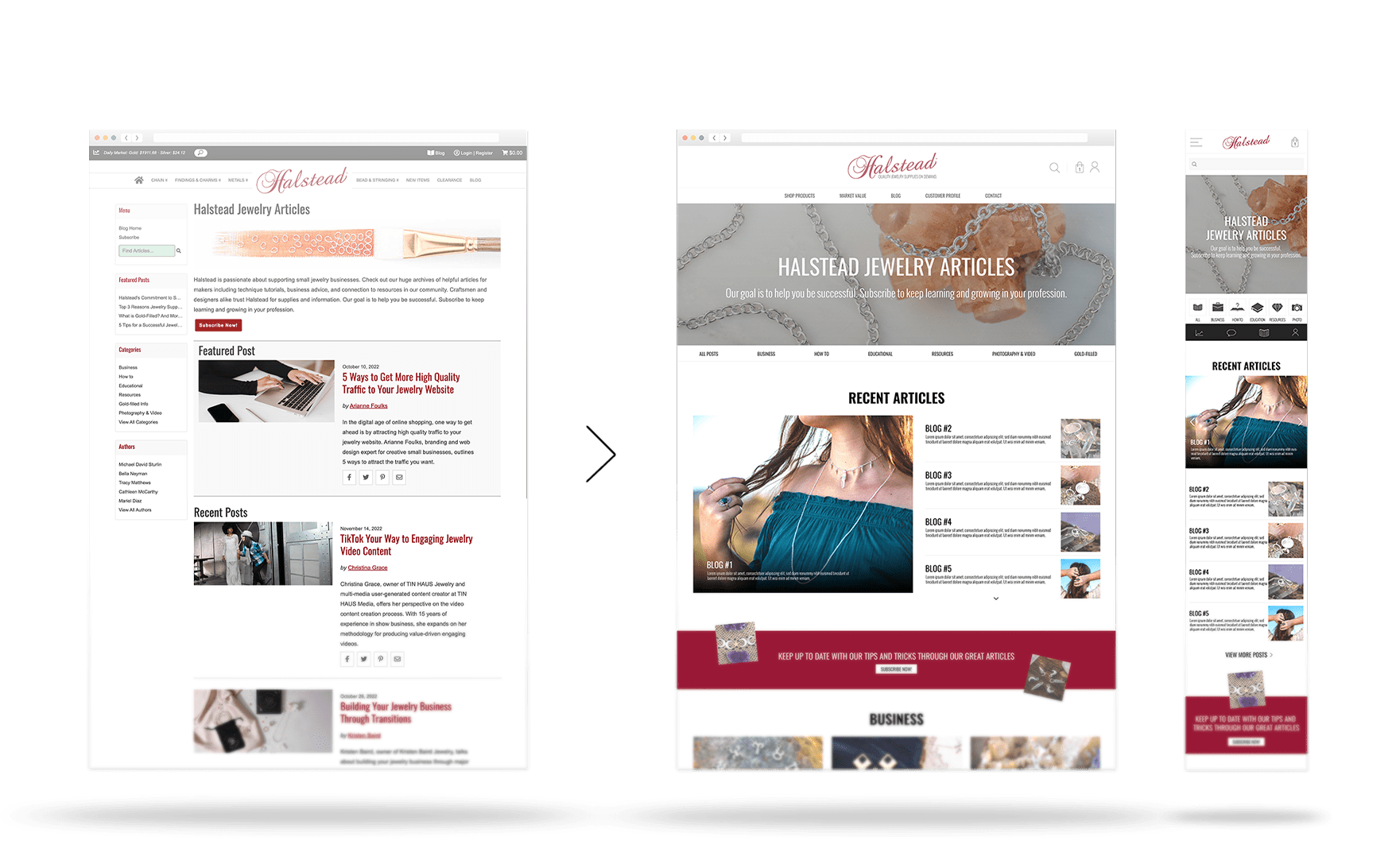
For the redesigned blog homepage, the marketing team wanted a way to showcase more recent articles without overwhelming the page layout or requiring excessive scrolling. To solve this, I redesigned the section directly beneath the masthead into a more compact and visually engaging article grid that allowed multiple featured posts to be displayed within a smaller space while still maintaining clear hierarchy and readability.
Another major update was the introduction of dedicated sections for each blog category, making it easier for customers to discover content relevant to their interests. This new structure improved content visibility across the site, encouraged deeper exploration of the blog, and helped surface educational and inspirational articles that customers may not have otherwise found.
Product Category Page
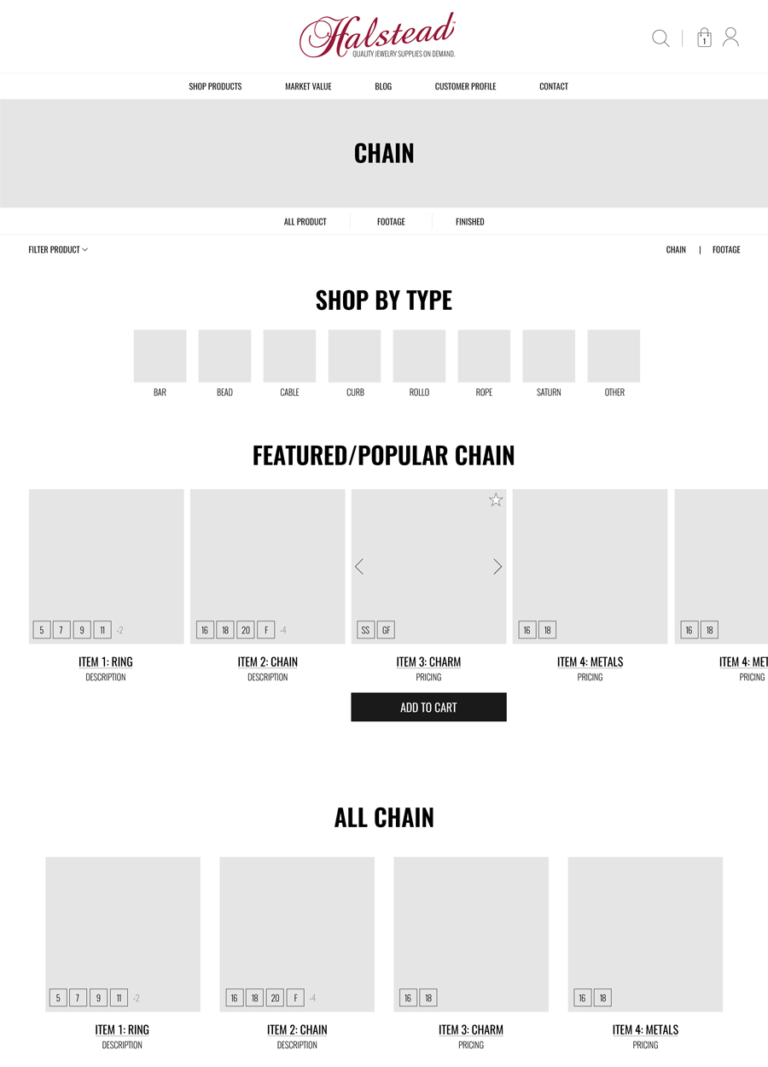
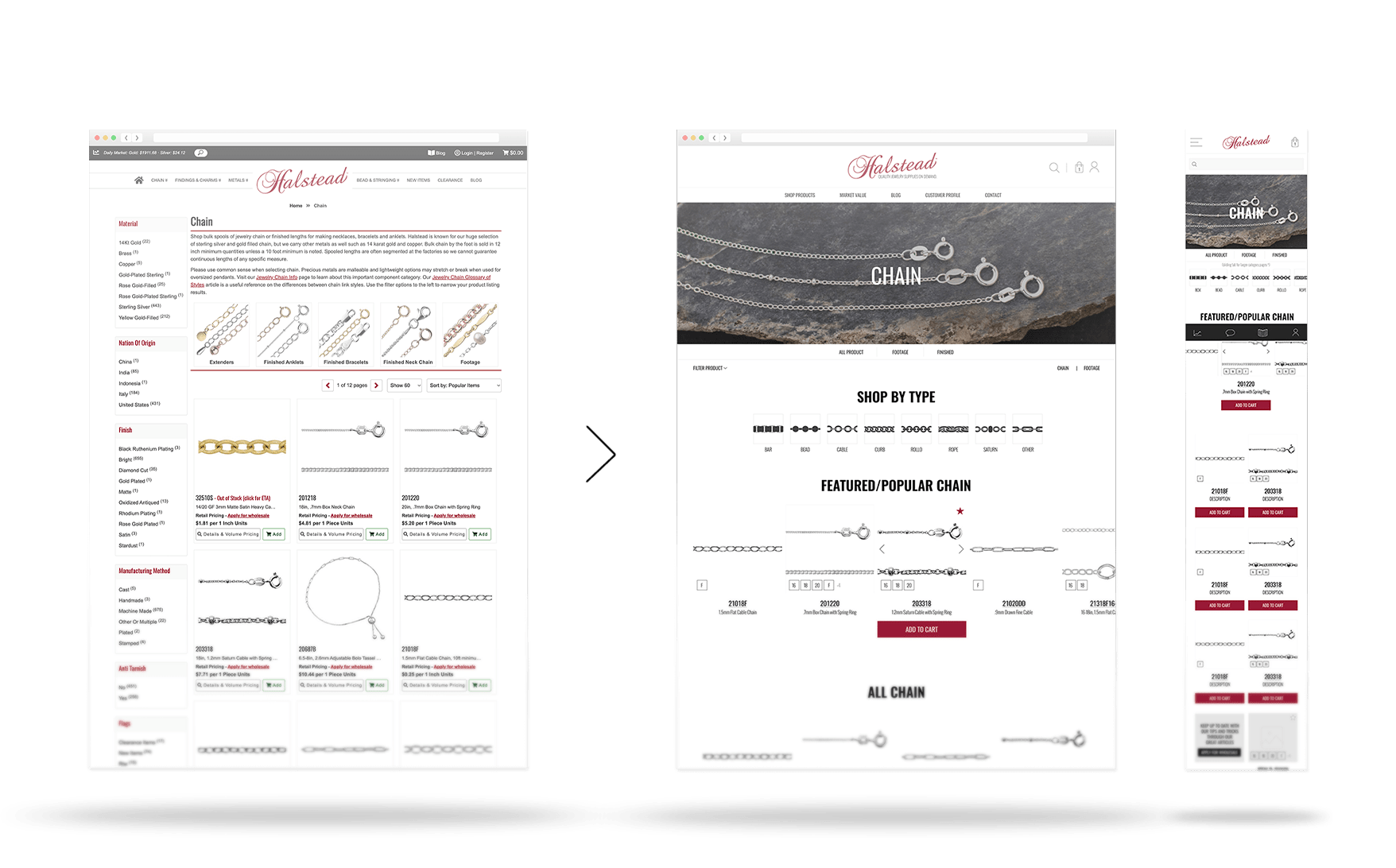
The category page design was updated to better align with the overall visual direction of the redesigned website, including the addition of a masthead to create a stronger sense of consistency and hierarchy across the user experience. As part of the redesign, the subcategory imagery was also reworked by replacing photo compilations with custom icons, creating a cleaner and more evergreen system that would remain visually consistent as product assortments changed over time.
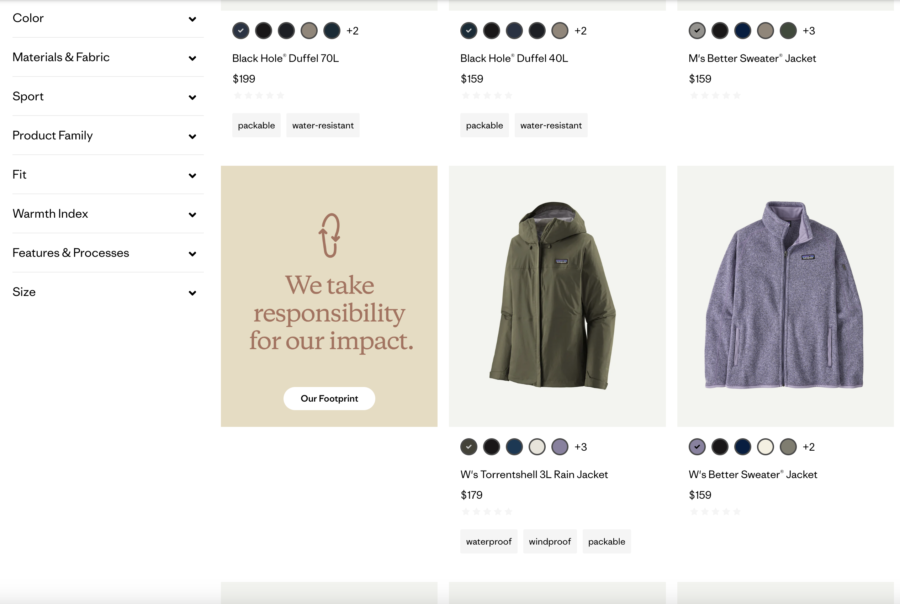
To create a more focused shopping experience, the layout was simplified to place greater emphasis on the products themselves. The filtering system was redesigned into a sticky dropdown menu positioned at the top of the screen, reducing visual clutter while still keeping filtering tools easily accessible as customers browsed through categories. This helped streamline the page layout, improve usability on both desktop and mobile, and make product discovery feel faster and less overwhelming.
Product Details Page
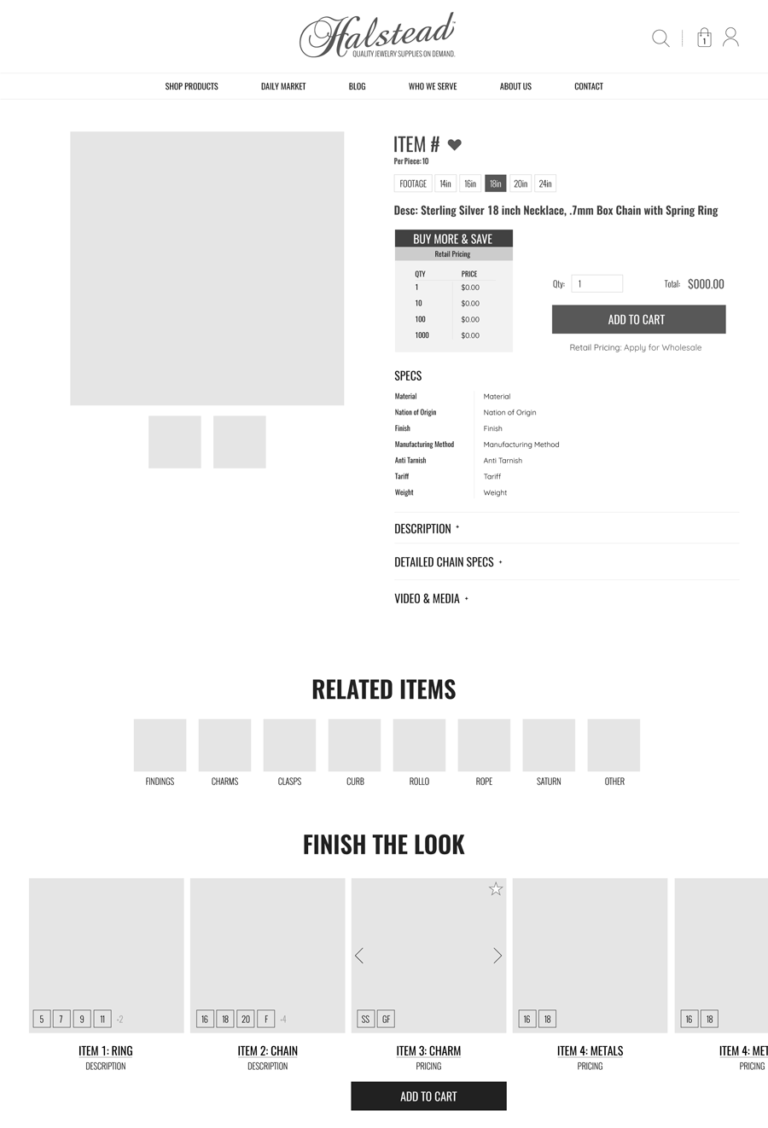
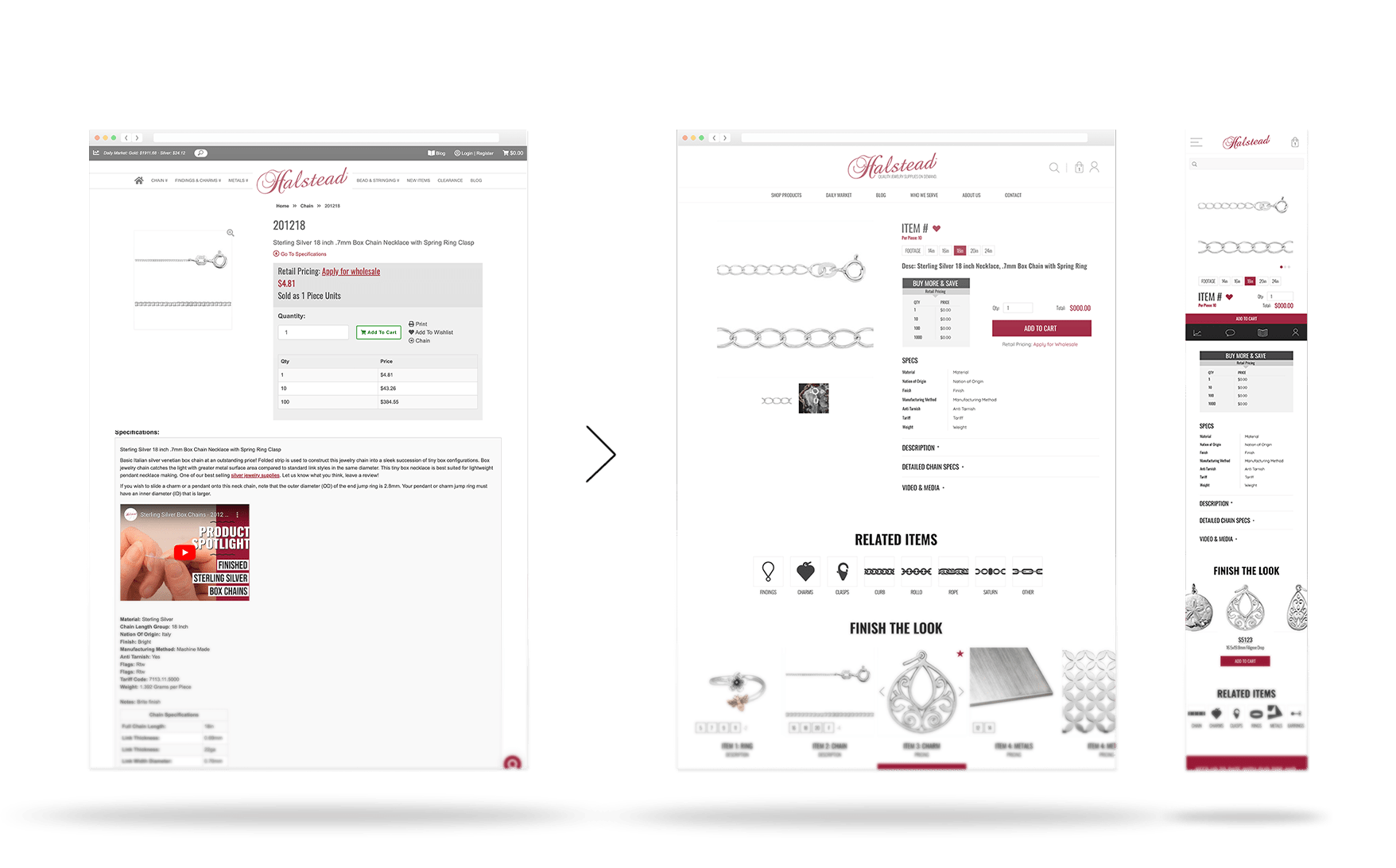
Like the other redesigned pages, the item detail page was simplified to create a cleaner and more user-friendly shopping experience. User research and internal feedback showed that customers often felt overwhelmed by the amount of product information displayed at once, making it harder to quickly scan details or focus on purchasing decisions.
To address this, the product information was reorganized into an accordion-style layout that allowed customers to expand only the sections most relevant to them, such as specifications, materials, or shipping details. This reduced visual clutter, improved readability, and created a more streamlined experience across both desktop and mobile devices while still keeping detailed product information easily accessible.
Icon Development
Make the site design more evergreen with the use of icons to identify product categories instead of a product image.
Table of Contents
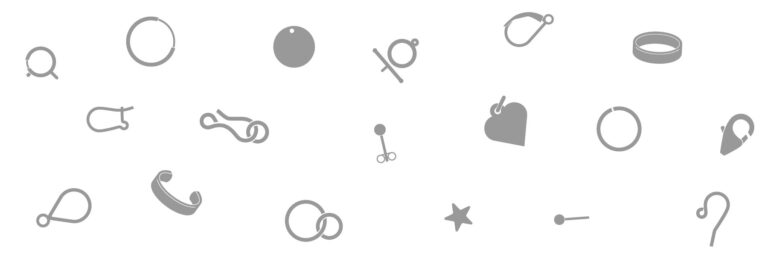
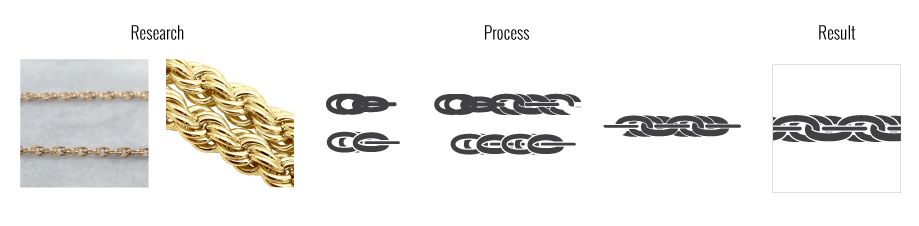
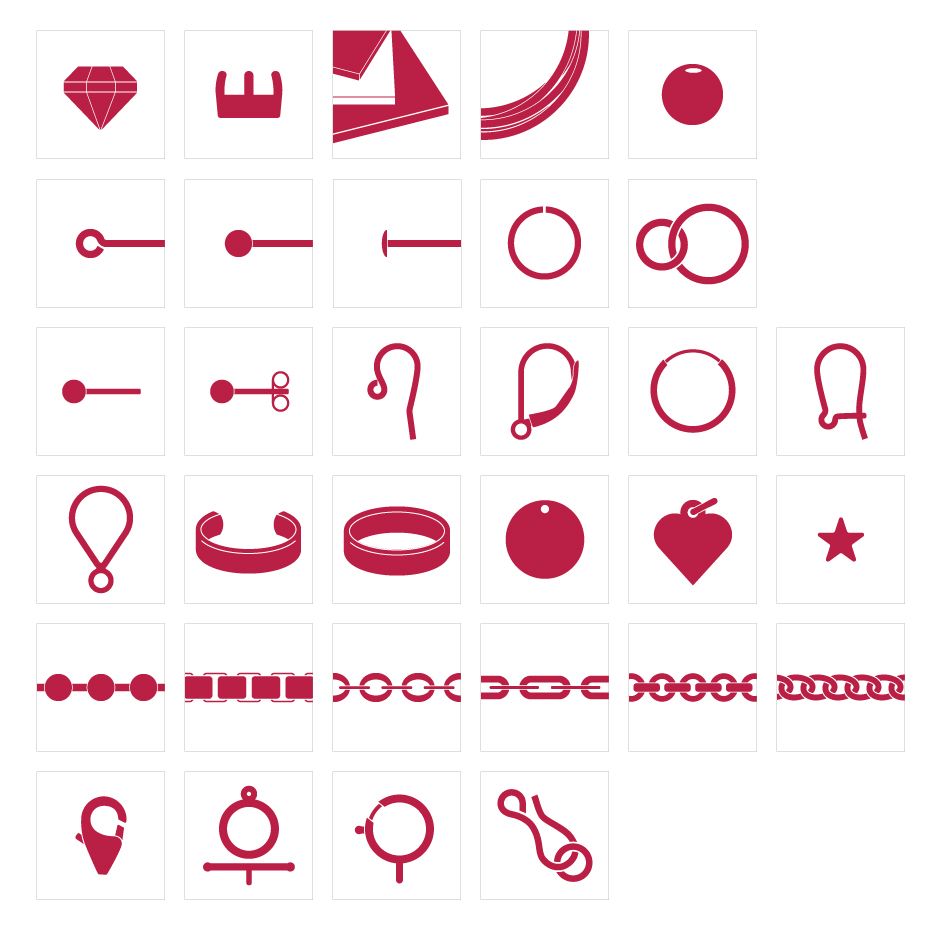
I was tasked with designing a custom set of jewelry-related icons for the various product categories carried by Halstead. The previous category imagery relied heavily on photo collages, which could quickly become outdated as inventory and product trends changed over time.
Each icon was designed around the most recognizable or commonly associated item within its category, helping customers quickly identify sections of the site at a glance without needing to rely entirely on text descriptions. The simplified icon system also helped reduce visual clutter, improve navigation clarity, and create a cleaner overall aesthetic that better aligned with the modernized direction of the website redesign.
Results
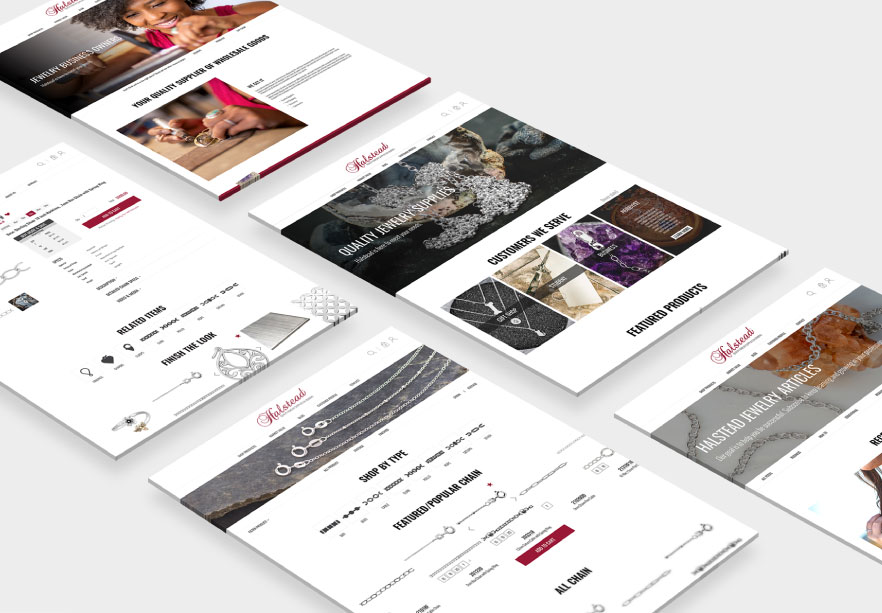
While not every aspect of the proposed redesign was fully implemented due to challenges during the development process, the final website still represented a significant improvement over the previous experience. Some design details and functionality evolved differently during implementation than originally intended, but the launch successfully introduced a cleaner, more modern interface with simplified navigation, improved usability, and a stronger overall visual identity.
In preparation for launch, Halstead also coordinated a customer outreach campaign across social media and other communication channels to inform users about upcoming account resets and familiarize them with the updated layout and navigation. Sharing previews of the redesigned experience ahead of launch helped ease the transition for existing customers and contributed to positive initial feedback surrounding the website’s improved organization, streamlined shopping experience, and refreshed design direction.